Amazon.com Widgets

As featured on p. 218 of "Bloggers on the Bus," under the name "a MyDD blogger."

Thursday, September 24, 2009

Financial Reform Already Takes A Hit

The Obama Administration has begun the agonizing process of scaling back their financial regulatory reform package to please bankers. This one's going to be so ugly I'll have trouble looking at how the sausage is made.

In a step toward overhauling the nation’s financial regulation, a senior Democrat on Wednesday announced a plan that preserved the core of the White House’s proposal for a new consumer financial protection agency, while jettisoning a smaller though symbolically significant provision that had posed political obstacles [...]

An Obama proposal that Mr. Frank rejected would have required banks and other financial services companies to offer so-called plain vanilla products, like 30-year fixed mortgages and low-interest, low-fee credit cards.

That proposal set off criticism by Democrats and Republicans, some with close ties to the banking industry, that it was the first step toward having government bureaucrats approve and disapprove an array of products.

At a hearing on Wednesday before the financial services committee, Treasury Secretary Timothy F. Geithner said: “There has been a lot of concern that if you invest the government with the ability to decide what’s appropriate here and there, that will lead to less competition and choice. The chairman’s proposals, which I’ve had a chance to read quickly, provide a better balance of choice and protection.”


Consumer groups are hanging their hats on the fact that the Consumer Financial Protection Agency hasn't been eliminated completely... yet. But Frank would exempt merchants, retailers, accountants, real estate brokers and IRA providers from any of its laws, and I would expect that list to grow. Banksters remain unconvinced that the CFPA needs to exist, and I'm fairly confident that they'll continue to advocate aggressively against it.

"We are pleased that a number of the issues we raised have been addressed," said Edward L. Yingling, president of the American Bankers Association. "At the same time, there are some very significant issues that still need to be addressed."

Among those issues, Yingling said, is that under the current proposal, states could go beyond the federal guidelines for consumer protection set by the new agency, an approach that financial firms say could lead to burdensome and conflicting regulation. A separate agency for consumer protection "still will have conflicts with the safety and soundness regulators," Yingling said. He and others also argue that the new regulator would be too powerful. "The agency still will have very, very broad, legislative-like powers. It can basically do anything it wants," he said. "We think that's a problem."

Also Tuesday, at an event outlining the chamber's objections to the CFPA, David Hirschmann, head of the organization's Center for Capital Markets, described the proposed new agency as an "overly broad, overly sweeping, big government solution."


It's good news that Frank pushed back hard against an alternate proposal floated by the Blue Dogs, but I fear we're seeing a slow walk toward something right in the wheelhouse of that alternative.

...Felix Salmon calls it the beginning of the end of meaningful reform:

There’s no good reason for this capitulation, except for the financial lobby has so effectively captured Congress that no reform would be able to get through with such a common-sense provision in place. This has nothing to do with the government “approving and disapproving a wide array of financial products”, it just says that anybody who wants to call themselves a bank should provide simple, basic banking products which aren’t prone to hidden fees and lucrative opacity. I fear that by the time Congress is done, the Consumer Financial Protection Agency won’t be able to protect consumers at all — and that’s assuming it’ll even exist.

Labels: , , , , , ,

|

Wednesday, September 09, 2009

Cramdown Returns

The Federal Reserve revealed survey results today showing the economy stabilizing throughout the country and the recession nearing an end. But without jobs, people won't feel that recession's end. As a result, even the Fed survey showed consumer spending "soft," and employment "weak" in all 12 Fed regions. And that will impact the still-unresolved sector of the economy that could easily relapse us into a double-dip recession, the housing market.

Although the ailing residential real-estate market is still weak, it also flashed signs of improvements. The Fed regions of Chicago, Richmond, Boston and San Francisco observed an "uptick in sales." Most regions said buyer demand remained stronger at the low end of the housing market, although Philadelphia did note an "upturn in sales at the high end of the market."

The Boston, Cleveland, Dallas, Kansas City, Richmond and New York regions credited the first-time home buyer tax incentive with spurring sales. Most regions reported downward pressure on home prices, although Dallas and New York said that prices were "firming."


That first-time homebuyers credit will soon expire, and this analysis fails to take into account the problems from those facing foreclosure, particularly those who got into adjustable-rate mortgages. The interest-only loan holders, in particular, could see a real disaster in the months and years to come when their rates reset.

Edward and Maria Moller are worried about losing their house — not now, but in 2013.

That is when the suburban San Diego schoolteachers will see their mortgage payments jump, most likely beyond their ability to pay.

Like millions of buyers during the boom, the Mollers leveraged their way into a house they could not otherwise afford by taking out a loan that required them to make only interest payments at first, putting off payments on the principal for several years [...]

With many of these homes under water — worth less than the loans against them — many interest-only mortgages will soon become unaffordable, as the homeowners have to actually start paying principal. Monthly payments can jump by as much as 75 percent.

The Mollers owe so much more than their house is worth, and have so few options, that they are already anticipating doom.

“I’m praying for another boom,” said Mr. Moller, 34. “Otherwise, we’ll have to walk.”


These people are going to lose their homes, with devastating consequences for the rest of the real estate market and the greater economy ($908 billion dollars are tied up in active interest-only loans). Even the Treasury Department expects millions more foreclosures in the same report that they tout their homeowner protection programs.

This is why it's good to see cramdown return. The provision, allowing bankruptcy judges to modify primary home loans unilaterally the way he would a vacation home or a yacht, would give those facing foreclosure a level playing field against lenders who have no incentive to change the terms of their loans.

House Financial Services Committee Chairman Barney Frank (D-Mass.) tells the Huffington Post he plans to revive the effort to give bankruptcy judges the authority to renegotiate home mortgages -- by making it part of this fall's much-anticipated financial regulatory reform bill.

Wall Street banks scored an overwhelming victory in April when they soundly defeated a cramdown measure in the Senate. Only 45 Democrats voted with homeowners, dealing the measure the kind of defeat that often sends legislation off into the wilderness for years, if not for good.

Frank and Senate Majority Whip Dick Durbin (D-Ill.), who led the bill in the upper chamber, both said after its defeat that it was finished. Frank was dismissive when, about a week after the vote, HuffPost asked if cramdown might come back. "Excuse me, what planet were you on last week? The vote was 45 to 51. Why would you ask that? Do I think there's a likelihood we could overturn 45-51? No," said Frank. "I wish it weren't the case."

But since then, foreclosures have continued unabated and the unemployment rate has continued to climb, increasing to 9.7 percent last month. Both forces feed on each other and create a drag on the economy.

The Obama administration had high hopes for the law Congress passed intended to encourage mortgage modifications. The law is all carrot, however, and no stick. Cramdown is the stick. If banks think they could get hit in bankruptcy court, they're more likely to bargain.


Because regulatory reform is a big bill with enough populist-friendly elements in it to be difficult to oppose, it could be a good vehicle for cramdown. Add that to the Consumer Financial Protection Agency and more credit card reform legislation, and that bill will be the subject of a huge fight, perhaps even bigger than the health care bill, at least in terms of lobbyist energy.

Labels: , , , , , , ,

|

Thursday, August 27, 2009

Barney Frank v. The Teabaggers


Anyone who is aware of all Internet traditions has by now seen the footage of Barney Frank taking down the Larouchie who asked him if he would support a "Nazi policy" by asking her, "On what planet do you spend most of your time?" But Rep. Frank was in rare form that night, standing up to the uninformed shrieking of the right and offering a real lesson in how to argue with conservatives. Rep. Frank's office provided Crooks & Liars (I'm working with them now) with the tapes of that town hall meeting in Dartmouth from last week, and I put together a sort of greatest hits reel.

Frank explains what deficit hawks should concern themselves with:

"I am struck by those who say, well, you don't care about the deficit. No, I do. I do care about the deficit. That's one of the reasons, not the only one, why I voted against the single most wasteful expenditure in the history of America. The Iraq war. If we hadn't gone to the war in Iraq, which I thought was a terrible mistake and voted against, we would have had more than enough money to pay for health care."


He argues with a "tenther" who thinks that Congress isn't authorized to provide health care for their citizens:

Frank: Do you think Medicare is unconstitutional, sir?

Teabagger: I think that Medicare needs to be reformed.

Frank: Do you think it's unconstitutional? You said that the Constitution doesn't give us the authority to do it, but Medicare was done. And, do you think Medicare is unconstitutional?

Teabagger: I think that Medicare needs to be reformed.

Frank: But you won't tell me whether you think it's unconstitutional, which you said--

Teabagger: I am not a Constitutional scholar-

Frank: Then why did you start off arguing about the Constitution?


That's really a fantastic exchange, where Frank digs an inch below the surface and finds nothing. He insists on having this questioner back up the rhetoric he cribbed off of Free Republic or wherever he got it, and the guy just couldn't do it.

And this is my favorite part:

Teabagger: Can you pledge to all of us here tonight, that if a new government single-payer system is instituted, that you will opt out of your Cadillac insurance?

Frank: Yes I am in favor of single payer, and that's why I like Medicare. (yelling) You act as if you people have discovered it is August. I have been a co-sponsor of the single payer bill, I think it would be better...

Teabagger #2: But we watch tapes of Obama and everyone else secretly say they're in favor of an eventual single pay system.

Frank: I haven't... sir, it's been 21 years since I've had a secret. (Laughter) And I don't have one now! You have discovered that I'm for single payer! I've been a sponsor of single payer for years!


What you see here is several things: 1) Rep. Frank is always in control; 2) he concedes nothing; 3) he allows his opponents to hang themselves with the outlandish logic of their own claims; 4) he knows when to throw in a well-timed bon mot. At one point, Frank says, "When you say things that people can't refute, they try to drown you out. That's understandable." That's someone who is confident in their beliefs. Democrats could learn something from that.

Labels: , , ,

|

Wednesday, August 26, 2009

Auditing the Fed Coming To Pass?

I got a hold of some video of that infamous Barney Frank town hall meeting, where he asked the Larouchie holding the Obama-as-Hitler sign, "On what planet do you spend most of your time." Turns out that a not-nearly-as-crazy questioner asked Frank about HR 1207, the bill to audit the Federal Reserve, which has bailed out the banks for hundreds of billions of dollars under a virtual cover of secrecy. Frank said he supported the audit and promised to pass it by October. He also vowed to curtail the kind of lending power that allowed the Fed to float $80 billion dollars to AIG, and said that the Consumer Financial Protection Agency would curtail the Fed's power by taking the consumer protection elements of their mandate away from them.


There are now at least 282 co-sponsors to audit the Fed, on a bipartisan basis, mostly because people just want these world-historical interventions in the economy to come with some transparency. Frank, who talked about this effort to the Boston Globe the other day, appears sincere in meeting this goal. The economic powers in the Obama Administration really don't want any part of this, saying that "You want to keep politics out of monetary policy," but this isn't really about politics but about giving the public a sense of what they're paying for on a daily basis. The Federal Reserve just lost a lawsuit that will require more disclosure about the emergency deals they have cut. If Barney Frank and Ron Paul are getting together on this, I think the tide is turning.

Labels: , , , , ,

|

Tuesday, August 18, 2009

Pretty Much What I Was Talking About

I wrote a post a few weeks back about Dem Congresscritters needing to treat the town hall paranoids the way comics treat hecklers. A case in point:


Nobody putting the President of the United States in a Hitler mustache for the crime of wanting to increase access to health care deserves respect. Barney Frank had the microphone and he used it.

Traditional media, take note.

Labels: , , , ,

|

Wednesday, June 24, 2009

Challenging The Status Quo

I'm going to try and get off Sanford Watch for just a moment, mainly because I'm reading the cringeworthy emails with most of my hand in front of my face. Because, despite the fact that it will get almost no media coverage, this is a pretty important statement from the Administration.

Preparing for a possible showdown with Congress, the White House on Wednesday threatened to veto legislation authorizing a $680 billion military budget if it contains money for jet fighters the Pentagon doesn’t want.

In a statement, the White House Office of Management and Budget said the $369 million that a House committee added to the bill as a downpayment for 12 additional F-22 fighters runs counter to the "collective judgment" of the military’s top leaders.

Defense Secretary Robert Gates wants to end production of the radar-evading F-22 after 187 aircraft have been built. Last week, in a preview of the White House’s veto threat, Gates called the funding boost a "big problem." [...]

Another provision in the House bill the White House strongly objects to adds $603 million for a back-up engine intended for another fighter jet in development called the F-35. The committee says the alternative engine is needed in the event the primary propulsion system has problems that might ground the aircraft.

But the White House says the extra engine isn’t needed and will slow the fielding of the F-35, a single-engine aircraft to be used by the Air Force, Navy and Marine Corps.


The backstory is that the Defense Department and the White House signed off on these cuts to the military budget, so did the relevant leadership in the armed services, and so did THE MANUFACTURERS OF THE PRODUCTS. At the time I didn't consider it that big a deal, because a lot of this money gets shuttled around to other equipment, and the overall military budget remains unsustainably high, at a time when we're scrounging for funding to give people quality health care. But some parochial politicians, and considering that the F-22 gets supplies from 43 states they're practically ALL parochial when it comes to the war machines, stuck the funding back in, for weapons and equipment that the defense establishment doesn't want.

For the President to offer a veto threat, which to my recollection is the first veto threat of his Presidency, over ending the military-industrial complex gravy train is pretty significant. If we don't take the first step and restore the ability to end weapons systems, then the military budget will just grow and grow. Most politicians already consider it magic and unrelated to any other spending, even while they scold about "runaway budget deficits" in the same breath. The jobs argument attempted here is bogus, "weaponized Keynesianism", as Barney Frank called it. Building bridges and roads and a smart energy grid were the kinds of job-creating engines that all the fiscal scolds considered too expensive during the stimulus fight, but suddenly when defense is on the menu, they're all "jobs, baby, jobs." Those Blue Dogs who scream about budgets can now tell everyone why we can afford a plane that the Air Force doesn't need and the manufacturer doesn't even want to make.

The President's taking a small risk here. I can already hear the resurrection of Zell Miller demagoguing in 2012 about "what are we gonna use, spitballs?" But this represents the setting of a marker, one of the first I can remember, that our military budget is not sustainable, and as a first step we have to be able to wind down Cold War-era weapons systems that are completely inapplicable to the present day. Not many people have allowed themselves to publicly make this argument. So it deserves some credit.

The relevant parts of the statement from the White House OMB below.

The Administration supports House passage of H.R. 2647, the National Defense Authorization Act for Fiscal Year 2010. The Administration appreciates the House Armed Services Committee's continued strong support of our national defense, including its support for the Department's topline budget requests for both the base budget and for overseas contingency operations.

The Administration appreciates, among other things, the leadership of the Committee in supporting many of the President's initiatives to terminate or reduce programs that have troubled histories, or that failed to demonstrate adequate performance when compared to other programs and activities needed to carry out U.S. national security objectives. In addition, the Administration welcomes the Committee's support for the Secretary of Defense's plan to increase the size of the civilian acquisition workforce and reduce the Department's reliance on contractors for critical acquisition functions. Also, the Administration appreciates that the Committee included authorities that are important to field commanders, such as the Commanders' Emergency Response Program and the authority to reimburse coalition partners.

While there are many areas of agreement with the Committee, the Administration nonetheless has serious concerns with a number of provisions that could constrain the ability of the Armed Forces to carry out their missions, that depart from Secretary Gates' decisions reflected in the President's Fiscal Year 2010 Budget which carefully balanced fiscal constraints, program performance, strategic needs and capabilities, or that raise other issues. The Administration looks forward to working with the Congress to address these concerns, some of which are outlined below, and to refine this legislation to align it more closely with national defense priorities.

F-22 Advance Procurement: The Administration strongly objects to the provisions in the bill authorizing $369 million in advanced procurement funds for F-22s in FY 2011. The collective judgment of the Service Chiefs and Secretaries of the military departments suggests that a final program of record of 187 F-22s is sufficient to meet operational requirements. If the final bill presented to the President contains this provision, the President's senior advisors would recommend a veto.

F-35 Joint Strike Fighter Program: The Administration strongly objects to the addition of $603 million for development and procurement of the alternative engine program, and the requirement for the Department to fund the alternative engine program in future budget requests to the President. These changes will delay the fielding of the Joint Strike Fighter (JSF) capability and capacity, adversely impacting the Department's overall strike fighter inventory. In addition, the Administration objects to provisions of the bill that mandate an alternative engine program for the JSF. The current engine is performing well with more than 11,000 test hours. Expenditures on a second engine are unnecessary and impede the progress of the overall JSF program. Alleged risks of a fleet-wide grounding due to a single engine are exaggerated. The Air Force currently has several fleets that operate on a single-engine source. The Administration also objects to the limit on the obligation of overall JSF development funding to 75% of the amount authorized until Department of Defense (DOD) has obligated all funds provided in FY 2010 for the alternative engine program. If the final bill presented to the President would seriously disrupt the F-35 program, the President's senior advisors would recommend a veto.


...Lorelei Kelly has more.

Labels: , , , , , , ,

|

Tuesday, June 23, 2009

Carrots for Barney Frank

I criticized Barney Frank last week for his demonizing of progressives and slavish defense of the Administration's horrid DOMA brief. He deserved the criticism. Now he deserves some plaudits.

First, Frank offered an amendment that would strip out unnecessary funding from the Defense Authorization Bill for the F-22 program, which the Pentagon, the President and even the manufacturer agree should be shuttered. Not only will this offer clarity on who wants to put parochial interests above the needs of the country, it will offer a good lesson on how "fiscal responsibility" goes out the window when it comes to defense spending, which of course to Blue Dogs and Republicans is magic and doesn't impact the bottom line. I don't think this amendment will be successful, actually, but House members should be up front about adding needless weapons spending that has not been used in the Iraq or Afghanistan theater while at the same time they scream about the deficit.

Then, Frank introduced a bill to decriminalize marijuana use, one of the first bills to upset the bipartisan consensus on the failed war on drugs that I've seen in decades.

A controversial law in Massachusetts could go national if Congressman Barney Frank gets his way.

Frank has filed a bill that would eliminate federal penalties for personal possession of less than 100 grams of marijuana.

It would also make the penalty for using marijuana in public just $100.

"I think John Stuart Mill had it right in the 1850s," said Congressman Frank, "when he argued that individuals should have the right to do what they want in private, so long as they don't hurt anyone else. It's a matter of personal liberty. Moreover, our courts are already stressed and our prisons are over-crowded. We don't need to spend our scarce resources prosecuting people who are doing no harm to others."


Frank says it best there. We should not be warehousing nonviolent offenders who do no harm to others and send them to what amounts to violent crime college. It's destructive to those individuals who need treatment and not jail, destructive to our budgets which runneth over with prison spending, and destructive to law enforcement who could be pursuing criminals but instead have to bust people for pot. Digby has more.

While Frank sometimes uses his prodigious skills to front for elite interests, and while he seems to unduly criticize those who attack his point of view from the left, he's a very useful lawmaker because he's willing to fight these battles that practically nobody else will fight.

...True Majority wants you to call your lawmaker and tell them to vote against purchasing F-22's that the Pentagon doesn't even want.

...Great quote by Rep. Frank:

I am of course struck that so many of my colleagues who are so worried about the deficit apparently think the Pentagon is funded with Monopoly money that somehow doesn’t count... These arguments will come from the very people who denied that the economic recovery plan created any jobs. We have a very odd economic philosophy in Washington: It’s called weaponized Keynesianism. It is the view that the government does not create jobs when it funds the building of bridges or important research or retrains workers, but when it builds airplanes that are never going to be used in combat, that is of course economic salvation.


It makes the hand-wringing over paying for health care completely ridiculous.

Labels: , , , , , ,

|

Thursday, June 18, 2009

Bad Barney

In general, I like Barney Frank. He's important because he's willing to go on television and ridicule Republicans. But he certainly has picked up that Beltway tendency to punch the hippies, hasn't he?

“Off the record, it’s what we call the responsible left,” said one Massachusetts lawmaker. Frank himself was scathing toward both sides, who had often mimicked one another’s arguments that the IMF money constituted a European bank bailout.

“The left and the right live in parallel universes,” Frank told POLITICO. “The right listens to talk radio, the left’s on the Internet and they just reinforce one another. They have no sense of reality. ... I have now one ambition: to retire before it becomes essential to tweet.”


I don't totally disagree that obsessing over $5 billion, far less than 1% of the federal budget, in the IMF loan doesn't make a lot of sense. Of course, antiwar activists really wanted to leverage the GOP opposition to get timelines in the Iraq and Afghan war funding - something Frank and all his Democratic colleagues loved when George Bush was in office. There's no reason that the SOFA deadlines had to be implicit, adding them into the funding request would have given Congress the voice they should have on these matters.

Worse, Frank betrays a certain comfort with parroting the party line of the White House and the leadership here, even when it comes to his own community:

Well, it seems a trip to the Oval Office is all openly gay congressman Barney Frank needs to stab his community in the back. After criticizing the DOJ's anti-gay DOMA brief this morning, Frank did a 180 this evening and lauded the brief, which invoked incest and pedophilia. Frank now thinks the brief is just super.

Frank claims that he gave a newspaper reporter his negative opinion of the brief without actually having read it.

Did you catch that? Barney Frank, our senior gay elected representative, and a lawyer himself, claims that he was giving legal opinions on a legal brief that he hadn't even read. At least Joe and I, who are also lawyers, read the brief before commenting on it. How many other issues has Barney opined on about which he's been knowingly willfully ignorant? (Of course, I don't believe Frank for a minute - he read the brief, but the president got him to recant.)

I am simply astounded. Even more astounding is that Barney's release sounds as if it were written by the White House. Their talking points are all through it, including the bizarre notion that somehow Obama would be as bad as George Bush if he opposed DOMA in court. (Repeating the lie that presidents never oppose existing legislation in court.)


I didn't realize until now what a slave to power Frank has turned out to be. He could use his intellect and rapier wit in an independent fashion, but clearly he chooses to do otherwise. Hope that helps his career arc.

...Lawdork disputes John Aravosis' reading of Frank's remarks, in a somewhat compelling fashion.

Labels: , , , ,

|

Friday, June 05, 2009

The Fight Over Executive Power

House leaders and the President are extremely worried that they will not get their supplemental war funding bill passed through Congress, and are whipping support among Democratic holdouts. There are a lot of moving parts and a lot of strange bedfellows.

First, a non-trivial part of the Progressive Caucus opposes any additional funding for Afghanistan, particularly given the vague, open-ended strategy put forward by the Administration. The current dynamic, where the US makes pretenses toward a counter-insurgency strategy and then steps up bombing campaigns to terrorize and inflame the local populations is anathema to a segment of the caucus.

Then, included in the bill are a tranche of money ($5 billion) for the IMF to use to lend to the developing world, an agreement that the President made at the latest G-20 summit. Almost all Republicans (and a few Democrats) oppose it and will oppose the entire supplemental as a result - because they support the troops.

Lastly and most important, attached to this bill is a truly heinous amendment written by Joe Lieberman and Lindsey Graham - but that's redundant - which would essentially rewrite the Freedom of Information Act and protect past abuses by keeping them secret.

It was one thing when President Obama reversed himself last month by announcing that he would appeal the Second Circuit's ruling that the Freedom of Information Act (FOIA) compelled disclosure of various photographs of detainee abuse sought by the ACLU. Agree or disagree with Obama's decision, at least the basic legal framework of transparency was being respected, since Obama's actions amounted to nothing more than a request that the Supreme Court review whether the mandates of FOIA actually required disclosure in this case. But now -- obviously anticipating that the Government is likely to lose in court again (.pdf) -- Obama wants Congress to change FOIA by retroactively narrowing its disclosure requirements, prevent a legal ruling by the courts, and vest himself with brand new secrecy powers under the law which, just as a factual matter, not even George Bush sought for himself.

The White House is actively supporting a new bill jointly sponsored by Sens. Lindsey Graham and Joe Lieberman -- called The Detainee Photographic Records Protection Act of 2009 -- that literally has no purpose other than to allow the government to suppress any "photograph taken between September 11, 2001 and January 22, 2009 relating to the treatment of individuals engaged, captured, or detained after September 11, 2001, by the Armed Forces of the United States in operations outside of the United States." As long as the Defense Secretary certifies -- with no review possible -- that disclosure would "endanger" American citizens or our troops, then the photographs can be suppressed even if FOIA requires disclosure. The certification lasts 3 years and can be renewed indefinitely. The Senate passed the bill as an amendment last week.


Plenty of House Democrats are angered by the inclusion of this highly pernicious amendment. While reports allege that Nouri al-Maliki was the driving force behind preventing the release of the photos, and that he claimed "Baghdad will burn" if they're released - quite at odds with the assertion by the President that the photos show "nothing sensational." But this is clearly a precedent too far, providing the President the sole discretion to suppress information above and beyond federal statutes. Barney Frank and another slice of House progressives will not support this amendment. And if they hold firm against the President, they can succeed.

Rep. Barney Frank, D-Mass. -- who initially opposed the package and is now trying to help Democratic leaders raise support for it -- said he recently told Treasury Secretary Timothy Geithner that liberal Democrats would not likely support the package if it includes the Lieberman amendment.

"I made it clear to the administration that I believe that we can get liberals like myself who are against the war [to] vote for it because the IMF is so important, but not if the [Freedom of Information Act] exception is in it," Frank said.

Rep. Louise Slaughter, D-N.Y., previously supported the supplemental but said she would not vote for the bill if it includes the amendment.

"There is no reason in the world for us to vote to suspend" FOIA, Slaughter said.


Nick Bauman has more, and views this fight as a first step for Congress to end the imperial presidency and the march toward official secrecy.

The photo suppression bill is an abomination that is reminiscent of the worst Bush-era excesses. It gives the executive branch the power to withhold an entire category of information from public scrutiny without any review. This law is Example A of the theory of the Presidency that says citizens should just trust the benevolent executive to do the right thing. Even in you oppose releasing some of the photos, I don't see why you would want to give the White House the power to unilaterally decide what's best. It says a lot about the Congress that members are willing to give Obama this kind of power. It says a lot about Obama that he supports this bill. Thank God for Barney Frank.


Jane Hamsher has an action item. To be clear, there's an easy way out of this - the President can ask the conference committee to strip the photo-suppression amendment, at which point passage would be fairly secure on a party-line vote.

Labels: , , , , , , ,

|

Thursday, April 23, 2009

Pecora Percolating

A little-known financial fraud bill in the Senate could be the vehicle to a wide-ranging Congressional commission to study the financial crisis and make recommendations for regulation.

The Senate signaled a willingness late Wednesday to create a select committee to investigate causes of the nation’s financial crises.

In an amendment accompanying other legislation on financial fraud, senators agreed in a voice vote to consider creation of a special commission that would delve into the roots of the collapse.

The amendment had bipartisan support from Senators Kent Conrad, Democrat of North Dakota, and Johnny Isakson, Republican of Georgia, as well as Senators John McCain, Republican of Arizona, and John Dorgan (it's Byron -ed.), Democrat of North Dakota. In a statement, Senator Dorgan’s office said the select committee would have full subpoena power and would not only hear testimony, but make recommendations for reforms to try to prevent future downturns of this type.


However, that vote contrasts with a separate commission voted through on the same bill, which would make the commission independent of Congress.

The Senate passed an amendment to an anti-fraud bill yesterday that would create an independent outside commission, complete with subpoena power, to investigate the causes of the crisis on Wall Street. The amendment was written by Sen. Johnny Isakson (R-GA), but was cosponsored by, among others, Sen. Chris Dodd (D-CT) [...]

These developments comes amid high level discussions among Congressional Democrats about the creation of an internal commission--modeled on the Pecora investigation into the 1929 collapse--to investigate the key events that preceded today's financial crisis. Dodd's staff has been largely silent on the idea of an internal commission, noting that his committee has already laid the groundwork for a thoroughgoing investigation. (Interestingly, the Pecora commission was conducted under the auspices of the Senate Banking Committee, which Dodd currently chairs.)

If the bill passes both the House and Senate with both amendments in tact, then the two commission will move forward, one outside the direct control of Congress. Democratic leaders agree that an investigation of some kind is in order have indicated some flexibility as to the exact specifications of such a commissions. Among the chief concerns are whether an external commission would enjoy subpoena power (though that concern might now be allayed) and that it could be stacked with people who lack either accountability or the incentive to investigate the issue thoroughly. One could, of course, raise similar concerns about an internal commission.


Barney Frank is already pulling back legislation on regulation, presumably until this commission business is straightened out. And I think that's somewhat wise. We're only going to get one shot at decent regulations, so we'd better array all the evidence and show all the fraud in the system before we set up the new rules of the road.

Labels: , , , ,

|

Thursday, April 09, 2009

It Comes Back To Housing

This was a really lucid article from Steven Gjerstad and Vernon L. Smith explaining the role of housing in the financial crisis, in case you're having trouble explaining this to your friends and family:

The 2001 recession might have ended the bubble, but the Federal Reserve decided to pursue an unusually expansionary monetary policy in order to counteract the downturn. When the Fed increased liquidity, money naturally flowed to the fastest expanding sector. Both the Clinton and Bush administrations aggressively pursued the goal of expanding homeownership, so credit standards eroded. Lenders and the investment banks that securitized mortgages used rising home prices to justify loans to buyers with limited assets and income. Rating agencies accepted the hypothesis of ever rising home values, gave large portions of each security issue an investment-grade rating, and investors gobbled them up.

But housing expenditures in the U.S. and most of the developed world have historically taken about 30% of household income. If housing prices more than double in a seven-year period without a commensurate increase in income, eventually something has to give. When subprime lending, the interest-only adjustable-rate mortgage (ARM), and the negative-equity option ARM were no longer able to sustain the flow of new buyers, the inevitable crash could no longer be delayed.


And that's where we are. The resets from all those ARMs could be foreseen pretty easily, but with rising prices, analysts who erred on the side of irrational exuberance thought people could just refi their way out of them and be saved by the price increase. It never was sustainable. And the securitization of the loans turned would could have been just a nasty problem confined to the specific sector into a global meltdown. When small towns in Tennessee and Alabama are swapping credit defaults and derivatives, you can see the problem clearly.

There's been a lot of talk about how we're saving the banks, but somewhat less on what we are doing at the root of the problem. There's a compelling argument to let this run its course and allow housing prices to revert back to the mean. That may be so, but rising foreclosures STILL destroy value in the market, because no buyers become willing to accept a property at anything but fire sale prices, constraining the ability of people who want to sell their home for other reasons and really upending the market. Today the President held a housing refinance roundtable and seemed to suggest that part of the solution lay in more refinancing:

What you've seen now is rates are as low as they've been since 1971. Three-quarters of the American people get their mortgages through a Fannie Mae-Freddie Mac qualified loan. And as a consequence of us being able to reduce the interest rates that are available, we have now seen some extraordinary jumps in the rate of mortgage refinancings.

And everybody here represents families who have saved hundreds of dollars a month, thousands of dollars a year in some cases, and that's money directly in their pocket. More importantly, what it's allowed them to do is to consolidate their loans in some cases, reduce the length of their mortgages in other cases. It has given them the kind of security and stability in their mortgage payments that a lot more people can take advantage of.

So the main message that we want to send today is, there are 7 to 9 million people across the country who right now could be taking advantage of lower mortgage rates. That is money in their pocket. And we estimate that the average family can get anywhere from $1,600 to $2,000 a year in savings by taking advantage of these various mortgage programs that have been put in place.


This makes sense in terms of economic stimulus but does absolutely nothing to restore the housing market, IMO. One can view pushing down mortgage interest rates and encouraging refinancing as a way to put money in the pockets of homeowners, money that they may be willing to spend. But the universe of people who just need a reduction in their interest rate to save their home is sadly pretty small. The loan modifications that have been interest-only frequently resulted in foreclosure down the road. Obviously this is not the only element of the Obama plan - and I see the point in highlighting it, because it could mean millions of dollars circulated into the economy, as well as a make-work plan for loan servicers - but it reflects a willingness to just tinker around the edges of housing policy instead of really attacking the problem.

Barney Frank's proposals to crack down on the types of loans servicers can offer by stopping 100% securitization and lots of subprime lending makes a lot of sense, but that's a second-order problem. The first-order problem is how to stop all these foreclosures. I'd like to see more attention paid to that.

Labels: , , , , , , ,

|

Tuesday, March 17, 2009

Shorter Andrew Sorkin: Leave AIG ALOOOONE

Andrew Sorkin tried to defend the indefensible today and make the case for the AIG bonuses, on the grounds that contracts must be honored.

That may strike many people as a bit of convenient legalese, but maybe there is something to it. If you think this economy is a mess now, imagine what it would look like if the business community started to worry that the government would start abrogating contracts left and right.

As much as we might want to void those A.I.G. pay contracts, Pearl Meyer, a compensation consultant at Steven Hall & Partners, says it would put American business on a worse slippery slope than it already is. Business agreements of other companies that have taken taxpayer money might fall into question. Even companies that have not turned to Washington might seize the opportunity to break inconvenient contracts.

If government officials were to break the contracts, they would be “breaking a bond,” Ms. Meyer says. “They are raising a whole new question about the trust and commitment organizations have to their employees.” (The auto industry unions are facing a similar issue — but the big difference is that there is a negotiation; no one is unilaterally tearing up contracts.)


That just seems wrong to me. Government did not write this bonus contract. I have no doubt that unscrupulous business types would use this as a pretext to wriggle out of their own contracts, but that doesn't mean it would be successful. And in fact, the parallel to the auto industry is perfectly analogous, because nobody is actually talking about breaking the contract but using taxpayer bailout money as leverage to force the outcome, which is what was done there. If this tax law to claw back AIG bonuses is pushed through, in fact the contract wouldn't be broken at all. So this sanctity of the contract strikes me as bogus. Furthermore, taking a stand now against exorbitant bonuses for bailed-out companies will serve as a deterrent to those who would search for loopholes in executive compensation caps and bonuses in the future.

Then there's Sorkin's second point.

But what about the commitment to taxpayers? Here is the second, perhaps more sobering thought: A.I.G. built this bomb, and it may be the only outfit that really knows how to defuse it.

A.I.G. employees concocted complex derivatives that then wormed their way through the global financial system. If they leave — the buzz on Wall Street is that some have, and more are ready to — they might simply turn around and trade against A.I.G.’s book. Why not? They know how bad it is. They built it.

So as unpalatable as it seems, taxpayers need to keep some of these brainiacs in their seats, if only to prevent them from turning against the company. In the end, we may actually be better off if they can figure out how to unwind these tricky investments.


Certainly the idea that the only people who can properly unwind these derivatives are the ones who wrote them is hard to swallow. It also doesn't entirely make sense.

That’s nonsensical. It’s clear they made a lot of mistakes and we need to undo what they did. If they really understood what they did in the first place, seriously, they probably wouldn’t have done much of it. Secondly, when you are trying to undo something, it is often not the case that the people who did it are the ones to put in place. People are sometimes committed to not admitting mistakes. … So that argument I think is in fact almost counter, because the argument that you take the people who made the mistake and put them in charge of undoing the mistake goes against the human impulse not to admit a mistake.


Sorkin just seems to be calling for a unilateral protection of elites because of their superior experience and intellect. I agree that it takes smarts to destroy your company AND get a bonus of well over a million dollars - some of which were retention bonuses which the individuals responded to by LEAVING THE COMPANY. But trusting them again to put the national interest ahead of self-interest just seems unwise.

If you truly want to throw up, read that report by Andrew Cuomo on who got the bonuses. This is ugly.

Labels: , , , , , ,

|

Sunday, March 08, 2009

Crime And Punishment

A lot of the crisis in the banking sector is attributable to legal practices, like changes in the law that allowed 30-1 leveraging and the rise of the shadow banking system. The biggest problem is that we allowed the financial sector to become far too large a part of the economy, when it should only exist to allow the efficient flow of capital and facilitate small business and manufacturing. It's not just that the banks are too big to fail; it's that they're too big. We have to rebalance our economy.

But a fair bit of it was just outright fraud. I'm not just talking about Ponzi schemers like Bernie Madoff, who is set to plead guilty (and his wife should not be allowed to keep $67 million dollars in the exchange, by the way), but the fraudulent tactics of bankers in several areas. A lot of members of Congress, in particular Alan Grayson, have been talking about that, and now Barney Frank is going public with his desire to seek justice.

House Financial Services Chairman Barney Frank (D-Mass.) is pressing state and federal authorities to seek criminal and civil penalties on financial actors that helped cause the current crisis.

"Rules don't work if people have no fear of them," Frank said at a press conference Thursday.

He announced a hearing March 20 with Attorney General Eric Holder, bank regulators and the Securities and Exchange Commission as witnesses to discover what their plans are to prosecute irresponsible and in some cases criminal behaviors.


I think the biggest thing troubling the public with respect to the financial meltdown is the lack of accountability. They see activities that they would surely be arrested for if they tried them, and yet nobody is being held responsible. Of course, the financial sector has gotten so big, and accrued a certain power along with their wealth, that they have a status somewhere above the law, despite statements like this from members of Congress. So we have to see the follow through.

One great initiative is what Change to Win is doing with Bank of America. As a fairly large shareholder in the bank through their pension funds, they are making known their dissatisfaction with the CEO, and preparing for a fight.

Now CtW has upped the ante on Bank of America, amid reports that B of A is seeking to quash a subpoena of records that show senior Merrill Lynch execs earned more money when B of A took over their struggling company than before.

The CtW Investment Group, in a letter to B of A's lead director, conveyed a simple message: Fire Ken Lewis, the bank's CEO, or CtW will encourage shareholders to vote him and other independent bank directors out of office during the company's next annual meeting.


Shareholders do have some power to force decisions on the corporate structure. But ultimately, if we're talking about criminality, this is a matter for the Justice Department.

Labels: , , , , , , ,

|

Monday, February 02, 2009

Back To Basics

Hale "Bonddad" Stewart explains why we need a stimulus, and in turn explains what "stimulus" means. It's been successfully framed by the right as a tax cut and nothing else, but that's completely bogus, so it's important to break down what's happened to the economy and why extraordinary measures must be taken. There are a lot of graphs showing the historically low data points on the economy, and then:

Let's look at this from another angle. The equation for GDP (Gross Domestic Product) is Consumer spending (C) + Investment (I) + Net Exports (E) + Government Spending (G) = GDP.

We've already covered personal consumption. It's dropping hard and fast (see the chart above). As for total private domestic investment, consider the following percentage changes from the preceding quarter starting in the 4th quarter of 2007: (-)11.9%, (-)5.8%, (-)11.5%, 0.4%, (-)12.3%. Because the US is a net importer the exports part of the equation is moot. That means the only thing holding up the US economy is government spending. And considering the mammoth drops in investment and consumer spending in the latest report (-12.3% and -3.5%, respectively) neither of these numbers appears ready to turnaround anytime soon.

There are some Republicans who are arguing that tax cuts are the answer. But there are several problems with that. The first is tax cuts were advertised as an engine of job creation in 2003 and we got one of the lowest rates of job creation on record [...]

In addition, recent history demonstrates that tax cuts will go to savings and paying down debt rather than consumption. In addition, there is little reason for business to invest in production right now.

That leaves pure spending [...] There's an old maxim in business: you've got to spend money to make money. That's where we are now as a country. We've exhausted the possibilities of the buy everything you can on the planet school of economic thought. We're in debt up to out eyeballs -- we are in fact choking on all of the debt we have wrapped up in consumption. We need to change models. That means we need to invest in new technologies and improve our basic infrastructure to attract and support this new business. It's really that simple.


Let me add one other tangible way to prove that government spending is all that's left: the buildup of unused goods in warehouses and stock rooms.

Consumers didn't consume, businesses didn't invest, overseas buyers of American goods didn't buy and unsold products piled up in warehouses in the final months of last year. Those factors combined to drive the economy to its weakest quarter in nearly three decades and signaled that the worst is still to come.

New government data showing that the economy contracted at a 3.8 percent annual rate in the fourth quarter was not as grim as economists had forecast. But the data on gross domestic product, released yesterday by the Commerce Department, were a portrait of an economy in a deep and broadening recession. Business inventories swelled as consumer appetites waned, suggesting that companies will cut their excess stockpiles and curtail new orders this year, pulling down growth in the months ahead.


There's no consumption, no investment, and no trade. Lump-sum payments to consumers will pay down debt and do nothing for the economy. Government spending is the only answer. This is not being done to fulfill a Democratic wish list, it's being done because we have no choice.

We need better surrogates on the stimulus, like Barney Frank, who made some crucial points yesterday on ABC.

DeMint: Let's not say it's a stimulus when it's a government spending plan. All of the things, the needs in our society, education, these are things we debate every year.

Frank: Spending can be stimulus. I don't understand.

DeMint: It's the largest spending bill in history and we're trying to call it a stimulus.

Frank: The largest spending bill in history is going to turn out to be the one in Iraq. If we're going to talk about spending, I have a problem when we leave out that extraordinary expensive, damaging war in Iraq, which has caused much more harm than good in my judgment. I don't understand from my conservative friends, building a road, building a school, helping to get health care, that's wasteful spending. But that war in Iraq, that's going to cost us over a trillion dollars, yeah, I wish we hadn't done that we would have been in a lot better shape fiscally.


Yes. Defense spending is not magical, and federal spending is stimulus. In fact that's ALL it is.

One way to start being a positive surrogate is to call your representative. According to reports, calls are running overwhelmingly against the stimulus on Capitol Hill. Lawmakers use that as an indicator of the relative popularity of legislation. Rush's minions are out-organizing us on this point. The number for the Capitol switchboard is (202) 224-3121. If you think the American economy is worth saving, call all of your representatives in Washington. The details are up to you, but you might want to tell them that they need to pass something that spends because nobody else will.

Labels: , , , , ,

|

Thursday, January 15, 2009

Lack Of Blockage

So Obama will get his bailout money after a Senate effort to stop it didn't pass.

The Senate voted narrowly today to permit President-elect Barack Obama to spend another $350 billion to stabilize the fragile U.S. financial system.

On a vote of 52 to 42, the Senate defeated a resolution that would have blocked the second half of the money from a $700 billion financial rescue program from flowing to the U.S. Treasury Department.

The vote was a victory for Obama, who made personal appeals to deeply skeptical lawmakers in recent days to try to rally support. Obama's economic team says the money is urgently needed, along with a massive spending package, to restore health to financial markets and the slumping economy.

The Senate's defeat of the resolution to disapprove the funds means the money will be available to Obama about a week after he takes office Tuesday.


Elena Schor at TPM has a good rundown of who voted what way, including the release of the "a-hole caucus" in the Senate, as Evan Bayh and Blanche Lincoln voted for the bailout under Bush but against giving Obama the money. I don't think that's totally defensible.

Meanwhile, the House is set to pass a pretty strong oversight bill, written by Barney Frank, that would restrict how this new batch of TARP money would be spent. One very good amendment to the bill just passed:

I sound like a broken record, but it's a shame that the Senate didn't take up its own bill setting conditions on the new administration as it spends the cash. Especially since one of the two amendments adopted this afternoon was Rep. Patrick Murphy's (D-PA) plan to require the Federal Reserve to reveal the mysterious terms and contracts governing its purchase of mortgage-backed securities.

"We are only just starting to get details about the contracts with the Troubled Asset Relief Program and that is only after the threat of a subpoena - we cannot let history repeat itself," Murphy said after his amendment was unanimously approved.


The Senate is not bothering to pass such a bill. If there's still time, they ought to be pushed to have a vote.

Labels: , , , , ,

|

Friday, January 09, 2009

The Future Of TARP

The oversight panel led by Elizabeth Warren released another stinging report on the TARP bailout today, slamming the Treasury Department again for the complete lack of accountability in the program.

The recent refusal of certain private financial institutions to provide any accounting of how they are using taxpayer money undermines public confidence ... For Treasury to advance funds to these institutions without requiring more transparency further erodes the very confidence Treasury seeks to restore.


Among the many details in the report are the degree to which Emperor Paulson made virtually no effort to advocate on behalf of taxpayers and not banks, highlighted by this Bloomberg report:

Henry Paulson may be the most powerful manager of money in the world and he still couldn’t do for taxpayers with the $700 billion bailout of American banks what Warren Buffett did for his shareholders in investing in Goldman Sachs Group Inc.

The Treasury secretary has made 174 purchases of banks’ preferred shares that include certificates to buy stock at a later date. He invested $10 billion in Goldman Sachs in October, twice as much as Buffett did the month before, yet gained warrants worth one-fourth as much as the billionaire, according to data compiled by Bloomberg. The Goldman Sachs terms were repeated in most of the other bank bailouts.

Paulson said “he had to make it attractive to banks, which is code for ‘I’m going to give money away,’” said Joseph Stiglitz, who won a Nobel Prize in 2001 for his work on the economic value of information.

“The worst aspect of this is that they were designed not to do what they were supposed to do,” he said in a telephone interview from Paris Jan. 7. “In many ways, it’s not only a giveaway, but a giveaway that was designed not to work.” [...]

“If Paulson was still an employee of Goldman Sachs and he’d done this deal, he would have been fired,” he said.


It's important to note that whatever comes out of the stimulus package is not the only spending that the government will be employing. There is also the second half of the TARP funds, about $350 billion dollars. George Bush is trying to steal the rest but he's run out of time, and the Congress can basically block him from getting it. The next Treasury Secretary, Tim Geithner, says that he's overhauling the program (that would make three overhauls since September).

Geithner has been working night and day on the eighth floor of the transition team office in downtown Washington with Lawrence H. Summers and other senior economic advisers to hash out a new approach that would expand the program's aid to municipalities, small businesses, homeowners and other consumers. With lawmakers stewing over how Bush administration officials spent the first $350 billion, Geithner has little chance of winning congressional approval for the second half without retooling the program, the sources added [...]

The group has come to believe the program needs a fresh start after determining the Bush administration succeeded in providing a measure of stability for the financial system but failed to jump-start bank lending or stem foreclosures, three sources said, speaking on condition of anonymity because no announcement has been made.


Geithner has no choice, without an overhaul he won't get the money. Barney Frank basically called for a revision along similar lines today.

As Josh Marshall notes, this turns TARP into something approaching stimulus - limiting foreclosures will have a tangible effect on the economy and consumer confidence. I'm just happy that we may not be wasting another $350 billion come January 20.

Labels: , , , , , , , , , ,

|

Thursday, October 09, 2008

Fixing The Mess

Noriel Roubini has a transcript of a colloquy between Barney Frank and Jim Moran that effectively informed the Treasury Department that they could go the route of partially nationalizing the banks instead of their craptacular troubled asset buy-up program:

At first, Congressional aides we contacted were confused on whether the wording in the legislation did allow such public recapitalization was permitted or not. They pointed out to us that several sections of the legislation could be interpreted as allowing such public capital injection. Specifically such senior Congressional aides argued that several sections of the bill could be used to argue that the purchased “assets” as used in these provision would include not only securities accounted for as assets on the balance sheet of the financial institution but would also include common and preferred share, warrants on common and preferred shares, as well as secured and unsecured and convertible debt in the financial institution itself, which would be accounted for as assets on the balance sheet of the US Treasury [...]

But we pointed out that this interpretation of “assets” as including preferred shares, left to itself, was a real stretch of the meaning of the legislation as preferred shares and common shares and sub debt are liabilities – rather than assets – of the bank. Thus, it was important to clarify that "any other financial instrument" was not limited to assets but also included institution’s liabilities such as stock, preferred stock, subordinated debt, senior debt.

In other terms it was necessary to explicitly clarify that the definition of “assets” or “any other financial instrument” in the legislation did allow for such public injection of capital so as to ensure that the regulations following the legislation would allow for such interpretation and actual practice. Since it was too late – by Wednesday last week - to explicitly modify the legislation to allow for explicit wording on this matter and since Treasury was resisting such late explicit changes (that would have jolted the banking industry) the tool that was used (in full agreement with the House and Senate leadership) to allow for such interpretation was to have Representative Jim Moran use the October 3rd House floor debate right before the final vote to put on the legislative record such interpretation. See the following important exchange between Jim Moran and Barney Frank that is now on the legislative record of the House:

Mr. MORAN of Virginia. Thank you, Madam Speaker. I won't take that much time. I do want to thank the chairman for his masterful leadership on this bill, and I do want to clarify that the intent of this legislation is to authorize the Treasury Department to strengthen credit markets by infusing capital into weak institutions in two ways: By buying their stock, debt, or other capital instruments; and, two, by purchasing bad assets from the institutions, in coordination with existing regulatory agencies and their responsibilities under this legislation, as well as under already existing authorization for prompt, corrective action and leastcost resolution.

Mr. FRANK of Massachusetts. Will the gentleman yield?

Mr. MORAN of Virginia. I'd be happy to yield.

Mr. FRANK of Massachusetts. I can affirm that. As the gentleman knows, the Treasury Department is in agreement with this, and we should be clear, this is one of the things that this House and the Senate added to the bill, the authority to buy equity. It is not simply buying up the assets, it is to buy equity, and to buy equity in a way that the Federal Government will able to benefit if there is an appreciation.


So Moran asks Frank to clarify that the explicit intent of the legislation is to allow the purchase of bank liabilities (stock, debt, or other capital instruments) not just assets; and Frank replies firmly that this is the case and that Treasury agrees with such interpretation. Done!


I know that there's this knee-jerk response that we're supposed to de facto assume that Democrats cave and aren't worth a warm bucket of spit, but they appear to have back-doored the right idea on this crisis.

Labels: , , , , ,

|

Wednesday, September 24, 2008

Forking It Over

So President Power Of Nightmares came on the teevee tonight and spoke darkly of grave and imminent dangers to our financial system, all of them somehow magically divorced from his own laissez-faire policies, belief in deregulation and failure to respond to the very clear warnings that we were headed down a path of disaster.

President Bush on Wednesday warned Americans and lawmakers reluctant to pass a $700 billion financial rescue plan that failing to act fast risks wiping out retirement savings, rising foreclosures, lost jobs, closed businesses and even "a long and painful recession."

His dire warning came not long after the president issued extraordinary invitations to presidential candidates Barack Obama and John McCain, one of whom will inherit the mess in four months, as well as key congressional leaders to a White House meeting on Thursday to work on a compromise.

"Without immediate action by Congress, American could slip into a financial panic and a distressing scenario would unfold," Bush said in a 12-minute prime-time address from the White House East Room that he hoped would help rescue his tough-sell bailout package.


Basically, gimme gimme gimme or the economy gets it. And while Bush appeared to accede to a lot of the steps sought by Congress - vague limits on executive compensation, some ability for taxpayers to cash in on the upside potential, and some manner of oversight - he drew the line at any re-regulation of the companies who got us into this mess, saying that it could "come later." And indeed, most of the talk was about the failure of borrowers to pay their bills, not the predatory practices of lenders to shuttle people into loans without explaining the circumstances (and through yield spread premiums, actually getting bonuses for that).

After a couple days of seeing the Paulson plan go down in flames, I now have a very queasy feeling about this. Bush clearly intervened in a Presidential election by inviting McCain and Obama to the White House, and the joint statement released by the two of them is worthless, all "we must rise above partisanship and work together for the good of the country" gibberish. McCain apparently dropped the specifics from the statement. Now the House and the Senate are claiming a deal with President Paulson, and the draft that's been floating around is not good. Ian Welsh calls it FISA all over again.

It's essentially a Wall Street giveaway plan, with only some fig leaves to try and pretend that it isn't.

Why? Because the language about taking warrants in exchange for buying up toxic assets is only for direct purchases and not for reverse auction puchases, which will be the majority of the purchases. As Soros points out, in any reverse auction, the government will get stuck with the most toxic of toxic waste because of information asymetries. In exchange they should at least get stock, equal not to what they paid, but to the face of the crap they are buying.

There is quite a bit of language about helping mortgage holders, but it is almost all qualified with words like encourage and request, rather than require. Since the Treasury is bailing mortgage holders out, the idea that the Secretary must "encourage" and "request" is just BS. The correct response is to make help for mortgage holders a requirement of participating in the program at all. If financial institutions don't like that they don't need to participate. Good way to make sure that companies that don't really need help don't swill at the trough.

Unlike the Dodd bill, this is not a copy of the actual language of the bill, but a summary gloss. Without seeing the language we don't know what's actually in there. Dodd was straight up with us. Frank is hiding his legislative language. Why?


The bill will allow bankruptcy judges to restructure mortgages for those having trouble paying, and that's the bright spot. But in the end, this is a stick-up. A stick-up with a $700 billion dollar price tag that was literally invented out of thin air. Now, there's one paragraph in The Hill piece that suggest this might go in stages:

Paulson said unemployment rates could approach 10 percent if the plan was not adopted, senators said, although he did indicate possible receptiveness to the idea of implementing it in stages. Such a plan, Paulson told senators, has worked in countries like Japan, where financial rescue plans were done in stages.


That's really the only way out of this right now. That $700 billion dollar price tag defunds even the most mildly progressive agenda. I think John McCain may have lost the election today, and at the hands of David Letterman, no less. But with the federal treasury raided and in the hands of Wall Street corporations who made bad decisions, it's hard to see how a President Obama can be anything but a fixer-upper and a caretaker. All because everyone bought the crisis frame so hard.

Labels: , , , , , , , , , ,

|

Monday, January 14, 2008

Less Money, Mo' Problems

The American economy is driven by consumer spending. As long as everybody must have the new Britney perfume or the newest handheld gadget or computer game or whatever, the economy will be in decent shape. That is no longer happening.

Strong evidence is emerging that consumer spending, a bulwark against recession over the last year even as energy prices surged and the housing market sputtered, has begun to slow sharply at every level of the American economy, from the working class to the wealthy.

The abrupt pullback raises the possibility that the country may be experiencing a rare decline in personal consumption, not just a slower rate of growth. Such a decline would be the first since 1991, and it would almost certainly push the entire economy into a recession in the middle of an election year.


You know what, we probably need to reduce the consumption rate and increase the savings rate. The middle class would be better served by getting themselves out of debt instead of becoming subservient to creditors. But the economy is virtually dependent on such desperation, driven by stock market exigencies to show perpetual growth.

People are concerned with the economy and aren't ready to mortgage their future any more. The challenge for Congress and the President to boost consumer confidence is great.

The White House and Congress are separately crafting economic stimulus packages that they are likely to unveil within the next two weeks. Both are looking at some form of tax rebate to pump money into the economy, but they differ on what else should be included. Bush is considering a one-time business tax break to encourage investment, while Democrats are focused on additional spending to help those struggling the most [...]

"We're not where the administration wants to be, but this is something people want to get done," said House Financial Services Committee Chairman Barney Frank (D-Mass.), who is helping to develop the Democratic package. "Sometimes people get political. But this is fairly serious. We want to stave off a recession or something that feels like a recession."


Incumbents ought to be spooked. Three-quarters of the country thinks the country is on the wrong track. They've seen a ruling class fiddling while Rome burns, inattentive to their real-world concerns. There's a reason the Presidential race has angled back toward the economy. A recession is looming, and one that won't be as mitigated by a traditional bailout. The problem is structural, as runaway capitalism without regulation continually leads us down the blind alley of speculative bubbles without concern for when it all falls apart.

The answer lies in discouraging these bubbles in the first place, not more tax breaks and bribing people back into the stores.

Labels: , , , ,

|

Thursday, February 08, 2007

Patrick McHenry as Billy Zabka

Patrick McHenry, the 31 year-old right-wing attack dog who's the front man for anything the Republic Party wants to put out that's outrageous, is kind of a fascinating figure. Whether it's ambition, or a true belief in wingnuttery, he's willing to put himself out in front as the alternately smug and persecuted face of the GOP. He reminds me a lot of Billy Zabka.


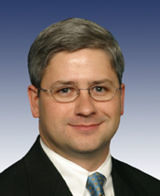
McHenry


Zabka

Zabka was the designated bad guy in 80s movies from The Karate Kid to Just One of the Guys to Back To School. He had the flipped-back preppy blond haircut, the smug look of self-satisfaction, and the attitude and style you love to hate. And he was willing to typecast himself into that role, so much so that once the 80s ended, so did his career.

That's McHenry. He doesn't mind being hated, doesn't mind making himself look ridiculous. In fact, this Washington Monthly article nails it perfectly:

No political movement can survive on talking points alone. It requires an endless succession of faces, flesh and bone, elected officials willing to impose their smiling mugs in front of the camera even when the talking points are ridiculous. In the nine months since he came to Washington, McHenry has cultivated a role as a kind of fraternity pledge for the House leadership, willing to do the dirty work on behalf of crusades that the rest of his caucus will no longer touch. He was still pumping Social-Security privatization this summer, months after the GOP leadership had given up on the bill. He was still attacking Terri Schiavo's husband after other Republicans, with an eye toward opinion polls, clammed up. And in June, he was summoned by the cable networks to defend Karl Rove after it began to appear likely that the president's chief strategist had identified Valerie Plame as a CIA agent while talking to reporters.

McHenry is perhaps the most successful and precocious of the endless string of those guys, the youngish Republican representatives who show up on cable television to defend the indefensible.


This has continued in the 110th Congress. He started by embarking on a two-day whine-a-thon about minority rights, which is embarrassing, given how the Republicans treated Congress like they were crowned emperor.

Then he was taken behind the woodshed by Barney Frank while trying to make a point about American Samoa (which has been amply covered on this site).


I would appropriate this to when Keith Gordon zings Zabka in Back To School:

Chas: [limping off the diving board] I have got a really bad cramp. I've been having really bad cramps all week.
Jason Melon: It's probably menstrual.
Chas: Screw you, Melon!


Then we saw McHenry claiming that contracting in Iraq is the Clinton Administration's fault at a Government Reform Committee hearing (I wish I could find video of this, but I covered it here), and calling the whole hearing a partisan show trial. Rep. Waxman responded by saying "You can't just look under every rock for partisanship, and I suggest the Congressman return under his rock." This pissed McHenry off more, and he made his little Zabka face when saying "I am offended that you would tell me to crawl under a rock!" You get the mentality here.

This is no different than when Zabka gets the business in this memorable scene:

Rick: [Rick gets on the table in the high school cafeteria to make an announcement] "Ah, excuse me, could I have your attention please!", your attention. Every day at lunch, we get a very special treat from a very special guy, a guy who has dedicated his life to building his body, pushing his muscles to the limits of human endurance,why you ask?, why?, well to be strong enough to lift tables and spill food, Greg Tolan!

[Everyone starts clapping]

Rick: Let's take a moment to find out a liitle bit about the man behind the mess,Greg, May I call you Greg?, Now tell us greg how you got into spilling food?, were a messy baby?, did you hate your strained peas?, Well you know how most psychologists tell us that guys get into bodybuilding to compensate for a lack of IQ, or a small weinie, which is it Greg?, well those of us in Greg's gym class certainly know the the answer to that one.

Greg Tolan: I'm going to beat the shit out of you Morehouse!

Rick: Isn't he great, muscles and a sense of humor, well let's thank Greg for the lunch time thrills and spills he's given us, OK EVERYBODY GET UP!, GRAB AN END OF YOUR TABLE!,

[the kids in the cafeteria go to an end of their table]

Rick: A trubute to you Greg, LIFT!

[Everybody in the cafeteria lift their table and spilling food]


Then TODAY, he got slammed by Rep. Bart Gordon and Rep. Barney Frank, who pretty much calls him a midget here, no?


I mean, by the end of that, can't you see McHenry going up to Frank and telling him "you win" like Zabka to Daniel-san at the end of the All-Valley Karate Tournament?

McHenry really is a fascinating figure. He seems to think he's going to be Majority Leader someday, and he apparently has cultivated some good inside sources. But he comes off perpetually looking like a clown, a square, an 80s teen movie villain come to life. I really want to check birth records to see if he's related to Zabka. The resemblance is uncanny.

Cheney: Sweep the leg.
[McHenry stares at him in shock]
Cheney: Do you have a problem with that?
McHenry: No, Sensei.
Cheney: No mercy.

Labels: , , , ,

|